

The Veiled Archive
Author Spotlight · November 10, 2026
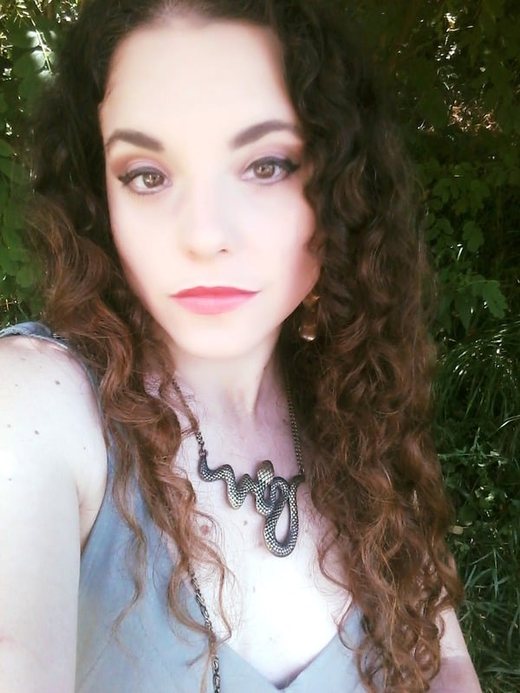
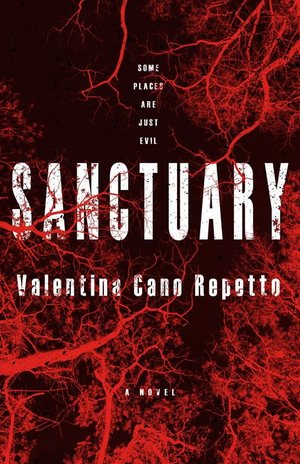
Valentina Cano Repetto
Say it: vah-len-TEE-nah KAH-noh reh-PEH-toh
I’m a horror writer and classical singer who was born in Uruguay, lived in Miami for 23 years, and now calls an 1800s watermill in Italy home.
— Valentina, in her own words
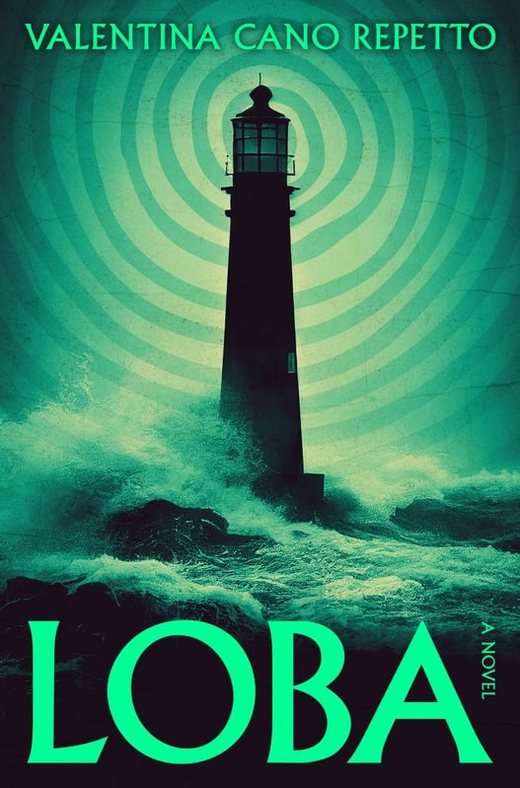
The book
LOBA
Angry Robot, November 2026
LOBA is available anywhere you get your books, including your favorite indie stores.
Content warnings, in her words: Domestic violence, animal abuse, suicidal ideation. Those are the three biggies.
In her own voice
Hear Valentina read
I. Sailors’ hell
What was the first seed of the book: the place, the sea lion legend, Delmira, or Amalia?
Cabo Polonio came first. I’d always heard stories about it growing up, all of those shipwrecks that earned the place the nickname of “sailors’ hell” because of how compasses and other navigation tools would not work. Even the lighthouse did little to fix the problem. That, along with the history of sealion hunting that stained the place until the animals received legal protection, sparked the idea.
Where is it set, and why there? Have you been to Cabo Polonio, and what about it felt like horror rather than a postcard?
I have been to Cabo Polonio, though it was when I was a child. The isolation is what makes it an excellent setting, I feel. There is no way of getting there except by horse or cart, and there is still no electricity or running water. Added to that are the sand dunes. They are less changeable now because of misguided modern attempts at planting non-native trees, but in the two timelines in the novel, the dunes could change the landscape in a few hours, leaving you disoriented.
II. A voice that didn’t trust itself
Who is at the heart of it, and how did you find their voices? Amalia and Delmira sound nothing alike on the page. Which was harder to write?
Delmira was the hardest character to write. I needed to find a voice that had been muted for so long that it didn’t trust itself. That it hid from itself and from the reader. I knew from the start that Delmira was the stronger character, despite Amalia’s violence, but that strength needed to be revealed gradually. Pacing her character arc was challenging for that reason.
Amalia was a bit more straightforward. She needed to be pure rage. Every instinct as close to the surface as possible. But, at the same time and despite everything she went through, she needed to be more naïve than Delmira.
Delmira hears her husband’s voice in her head even with miles between them. Was it important to you to show how abuse keeps talking?
Abuse is pervasive. It seeps into every tissue in the body. The victim starts to see everything through the filter of their abuser. Will doing this upset them, etc.? After weeks, months, years, of this, the abuser has installed a piece of themselves in their victim. Delmira spent 10 years with Santiago, so getting rid of his voice and learning to trust her own requires tremendous effort.
Jacinto lives closer to the sea lions than to the village. What did you want him to show about the men in this book?
I wanted Jacinto to represent everything that healthy masculinity can offer. A willingness to help without needing to possess, an understanding of just how much harm he could cause and a desire not to cause it. I wanted to put him in direct contrast to Santiago. Both of them were abused, but only one of them refused to follow in his father’s footsteps.
III. She keeps a tally
What is the horror really about, underneath?
The subjugation of the feminine, in all of its forms. From “Mother Nature” to women. Human cruelty has always held horror to me, much more than ghosts and demons.
The sea feels close to a character, with her own memory and rules. Did you think of her that way while writing?
Absolutely. She needed to be the main female strength in the novel, “someone” who has had just about enough. I’m a firm believer that nature remembers what is done to her. And she keeps a tally.
Selkie stories usually belong to Scotland, Ireland and the far north. What made you bring that myth to the sea lions of the Uruguayan coast?
There are many stories in Uruguay of people (women, in particular) being animals trapped in human shape. I took inspiration from a real legend of Cabo Polonio, the seagull woman, who was raised by seagulls and could only speak their language, and mixed that with Amalia’s own confusion and twisted memories.
Spirals turn up everywhere, from the staircase to the logbook to the seashells. Where did that image start for you?
It was there from the start. I had a very clear image of Amalia’s mother making the spiral against her cheeks to comfort her, and I wanted her subconscious to keep hold of that.
I’m a firm believer that nature remembers what is done to her. And she keeps a tally.
Valentina Cano Repetto
IV. A century apart
Why 1852 and 1951, a century apart? What does each year give you that the other can’t?
In 1852, the lighthouse was not built yet in Cabo Polonio, so that provided the chance for Amalia to see light that was not there yet, solidifying the mutual haunting that I wanted to get across.
By 1951, all other lighthouses in Uruguay had been electrified, which is an essential plot point. The only one that still needed to be run manually was the one in Cabo Polonio.
I wanted to highlight, too, the three main steps of the haunting: the drowning, the fire, and the hanging. 1753, when Polloni crashed the ship with the “treasure,” 1852, when Amalia destroyed the village, and 1951, where we meet Delmira. Just a little detail.
Time misbehaves in Cabo Polonio: watches die, hours repeat. Was that there from the first draft, or did it grow out of the two timelines?
Yes, that was there from the start. It was all there already in Cabo Polonio’s real history, so all I had to do was enhance it.
The lighthouse is as much a machine as a building: the winding, the weights, the mercury bath. How much did you research how a 1950s lighthouse actually ran?
It’s very difficult to find information on the actual Cabo Polonio lighthouse, but since it has an English Fresnel system, I looked at similar ones. There are many throughout New England that are almost identical, with virtual tours, plans, and instructions. My laptop is filled with manuals, so if I wanted to run a lighthouse myself, I’m pretty sure I could do it!
V. The rawness of Quiroga
Which writers or works shaped how you write horror? In your 2024 HWA interview you named Horacio Quiroga first.
Quiroga is a huge inspiration because of the rawness with which he wrote. He lived in complete isolation, dealing with all of the challenges that nature threw his way, and had a way of describing just how powerless we are against it. I always seek to capture that rawness, even if it’s painful to write.
Recently, I’ve been hugely inspired by modern Hispanic writers, especially women. Isabel Cañas and Silvia Moreno-Garcia come to mind, first, of course, but there are many more. I love that women finding their groove in this genre that has been male-centered for a while.
VI. After the last page
What do you hope a reader feels when they close it?
Despite its violence, I hope readers leave the [story] with a sense of hope.
What are you working on next?
At the moment, my agent is working their magic finding my new novel a home. It’s a Faustian story with a female serial killer. Always historical horror.
VII. Lines from LOBA
The lines read on the episode, each one approved by Valentina.
I’d been rich in the jewels his blows had given me.
Ch. 1Señora Torres, stay off the ground floor at night. That’s where she appears.
Ch. 2So she takes a few ships and a few lives when she can, trying to balance an unbalanceable tally.
Ch. 3She stands on the rocks and points to the sea points to the sea points to the sea.
Ch. 5It’s every twelve seconds.
Ch. 6Versions of pain spring-loaded into the mundane.
Ch. 7Had it been this mind again, growing like fungus on my true brain?
Ch. 14Three generations sharing violence and a name.
Ch. 15As stupid as ever, Delmira.
Ch. 18
VIII. Saying it right
Valentina checked every one of these.
- Cabo Polonio
- KAH-boh poh-LOH-nyoh
- Delmira
- del-MEE-rah
- Amalia
- ah-MAH-lyah
- Jacinto
- hah-SEEN-toh
- Mirta
- MEER-tah
- Aníbal
- ah-NEE-bahl
- Valizas
- vah-LEE-sahs
- Panela
- pah-NEH-lah
- loba / lobo marino
- LOH-bah / LOH-boh mah-REE-noh
- luz mala
- LOOS MAH-lah
- naife
- NIGH-feh
- ojos
- OH-hohs
- bacalao
- bah-kah-LAH-oh
- yaguareté
- yah-gwah-reh-TEH
- Espinillar
- es-pee-nee-SHAR
- Chuí
- choo-EE
- Charrúa
- chah-ROO-ah
A word to readers
A huge thanks to every single reader who picks up this dark tale and takes the time to read what I wrote. This is a story of great love and great pain, and I’m immensely grateful to be able to share it.
— Valentina Cano Repetto
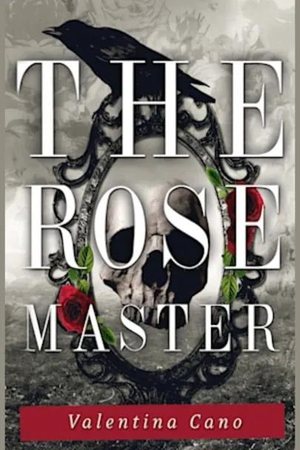 The Rose MasterThe Rose Master series
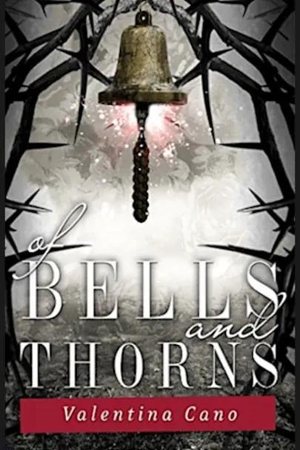 Of Bells and ThornsThe Rose Master series
 Aleister Blake
 Sanctuary