
This file goes with the episode below. It isn’t a transcript. It’s the same case, set down on paper for anyone who would rather read it, or read it again. No endings are given away. Content note: wartime violence and death, references to suicidal thoughts, drug misuse and overdose, sex work, and the abduction and exploitation of teenagers.
The current file
Operation Wandering Soul
Nick Mendoza’s Vietnam ghost story, and the real tape it was built on.

The sound comes first
Before you meet a single character in Operation Wandering Soul, you hear a voice wailing down through the jungle canopy from a helicopter you can’t see. Under that sound, a twenty-two-year-old lieutenant named Mark Schroeder counts his men in the dark. He brought twenty-seven of them in, and he means to bring twenty-seven out. The landing zone is too hot, the choppers have pulled away, and somewhere behind him one of his soldiers is screaming.
Then the book cuts to Houston in 2008. Mark is sixty-one, divorced and slipping at an office job, and he wakes on soaked sheets with two prescription bottles in his fists and something standing in the corner of the room. A new antidepressant, mixed with an old pain prescription, has started pulling him back to one night in 1969, and to the one soldier he didn’t go back for. And something with a burned face has followed him home.
For those who came back, and never stopped going back.The dedication
That’s the whole book in ten words. Nick Mendoza self-published this novella at the end of May 2026, and it’s built on something real. I think it exists to ask what a man owes the dead, and whether a debt like that can ever be paid from fifty years away.
A haunting that was a weapon
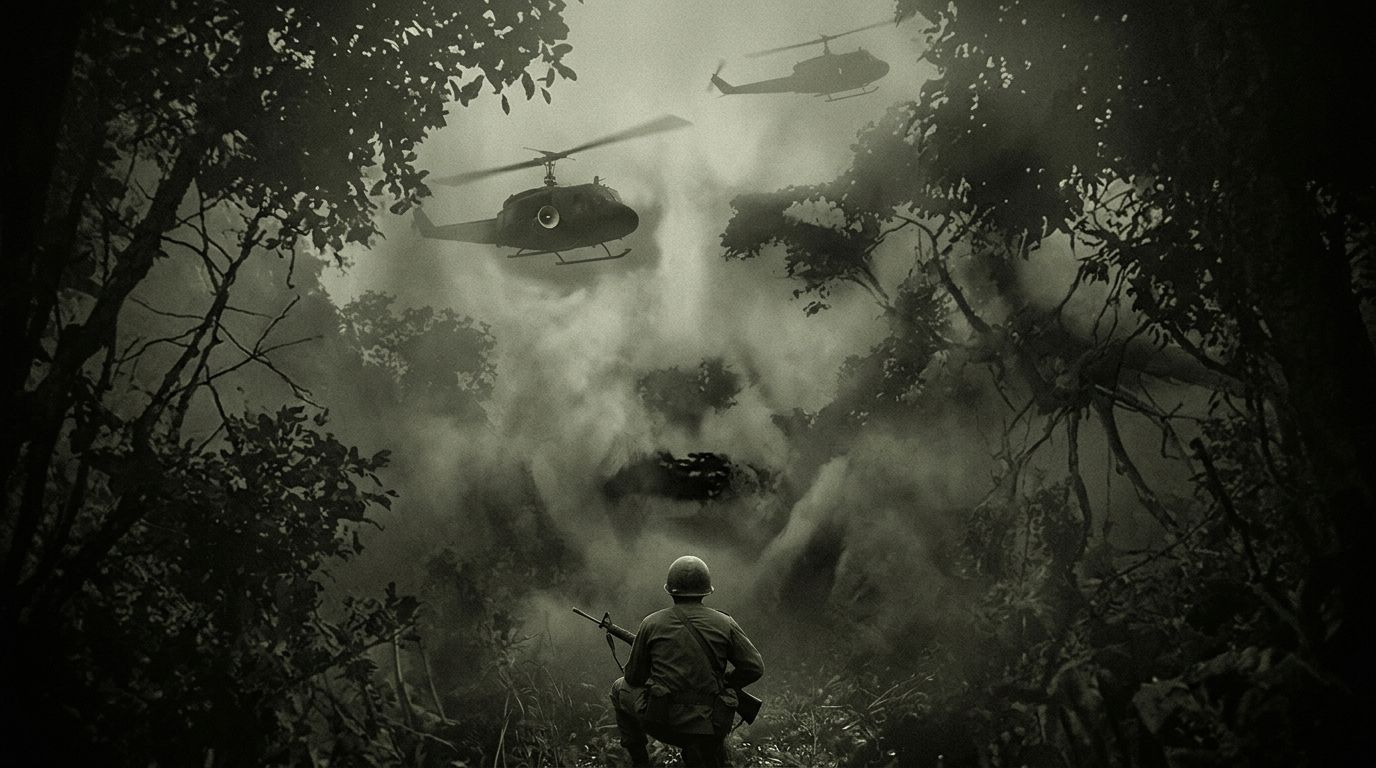
The haunting at the centre of this book was real. During the Vietnam War, American psychological warfare teams played a tape at Viet Cong positions. It was built on a Vietnamese belief that the dead who aren’t buried properly in their homeland wander in pain, and that they can be reached on the anniversary of their death, near the place where they died. The best-known recording is remembered as Ghost Tape Number Ten, and “number ten” was period slang for the worst there is.
Reports from 1968 describe a tape of about four minutes. It opened with funeral music and wailing, then a little girl calling for her father to come home, then a man’s voice answering as that dead father, telling his friends to go home before it was too late. It played from helicopter loudspeakers, from aircraft, from Navy boats and gunships, and from speaker packs soldiers wore on their backs. Nobody on record has named who made it, and the sources don’t agree on whose voices are on it. (The episode plays our own recreation of it, built only from those descriptions. It is not the original 1968 broadcast.)
The record is clear on what it did. One Navy gunship pilot said that, without exception, they drew fire. It also frightened the South Vietnamese troops and villagers on the American side, which was never the plan. Mendoza’s preface says the tapes sometimes worked. The record is harder on them than that, because nobody has shown the tape changed a single outcome. But he’s right about the rest, and he says it in the next breath: the enemy fired at the speakers, and the sound frightened everyone who heard it.
Here’s what sets the book apart. The anthropologist Heonik Kwon has documented how Vietnamese families live with their war dead. Ancestors who died a good death at home are honoured inside the house. Ghosts who died a bad death on the road are honoured at a second shrine outside, and that shrine takes in strangers and enemy dead as well. A review of Kwon’s book quotes a Vietnamese saying: there are no enemies in cemeteries. The American tape aimed that belief at the enemy’s dead. Mendoza turns the weapon around, so the man who can’t lay his dead to rest is the American, and Mark says so out loud.
It was designed to mess with the enemy’s head. But it messed with ours too.Chapter: “Blood Debt”
A ghost story that runs on engineering
Nick Mendoza is a Houston writer. According to the book’s author page, he has a computer science degree from Cal State Fullerton, wrote a book on PHP development and made a video series on running WordPress websites before moving into screenwriting. He wrote and directed the indie horror feature Video Tape Terror. His afterword says this story began as a screenplay after a late-night conversation with a friend at a Houston Denny’s, and that screenplay became a Page Turner Awards finalist before it became this novella.
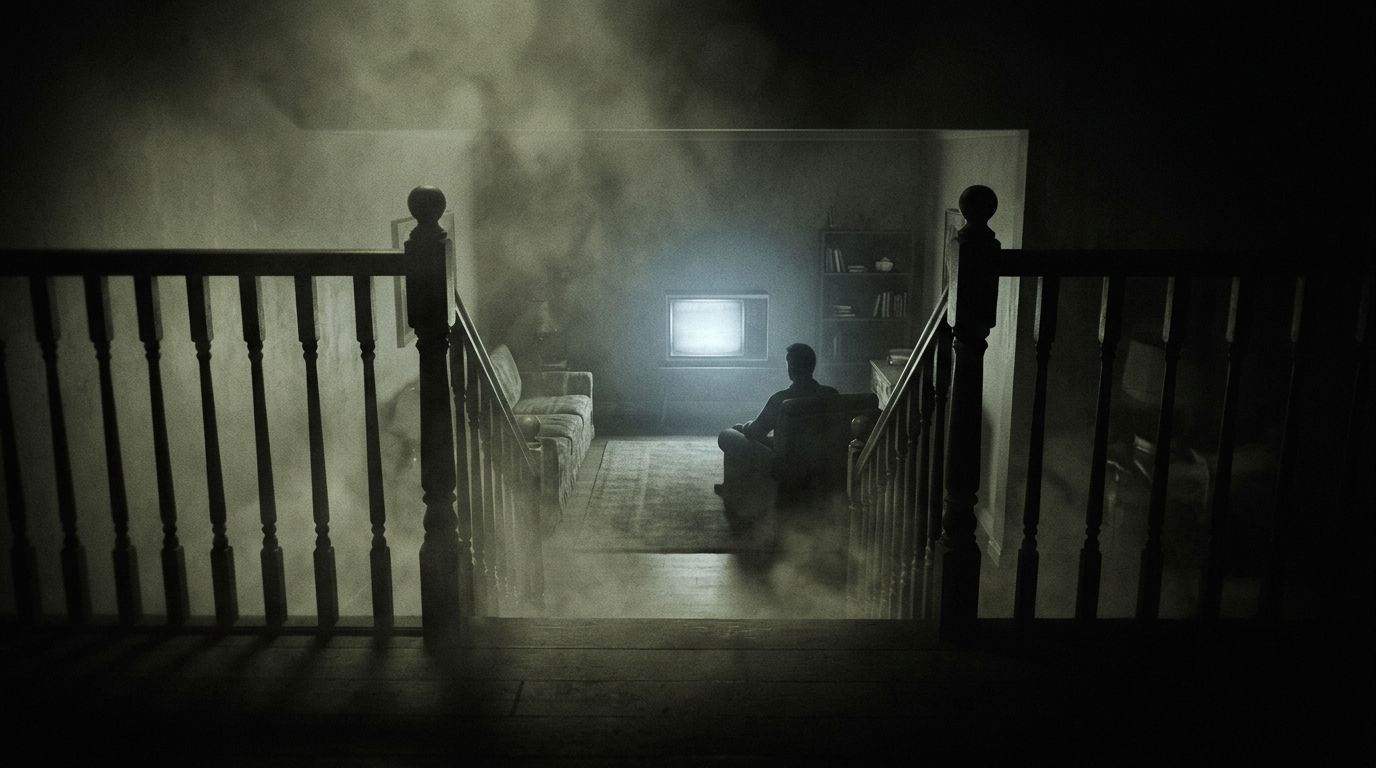
The afterword also says where the war came from: as a kid he watched Platoon through a stair railing after his father sent him upstairs. That’s the paradox I like here. A software developer and technical writer has written a ghost story that runs on engineering. The ghost was a recording somebody built. The way back has a price, and the book keeps count. And the time rule balances to the minute.
Which book this is, and its company
First, for anyone searching the title: this isn’t Richard Powers’s Operation Wandering Soul, the 1993 National Book Award finalist, which borrows the operation’s name for a story set in a children’s hospital ward. Mendoza goes straight into the jungle, and into the tape itself.
The literary match I keep coming back to is Tim O’Brien’s The Things They Carried (1990). Mendoza’s afterword calls this a story about the things people carry long after their war ends, and the echo seems deliberate. Both books treat memory as a load a man has to haul. The difference is that O’Brien’s soldiers carry their dead in their heads, and Mendoza’s dead get up and follow.
On screen, the closest kin is Adrian Lyne’s Jacob’s Ladder (1990), where a Vietnam veteran back home sees demonic faces in ordinary people and the film keeps asking whether the war or the medicine is doing it. Bob Clark’s Deathdream (1974) is the root of the soldier who comes home wrong. And the author names his own influences, among them R-Point (2004), a Korean ghost film set in the Vietnam War, and Guillermo del Toro’s Pan’s Labyrinth (2006). His preface says that in films like Pan’s Labyrinth the war feels less like a setting and more like a haunting, and that’s the line this book walks.
An unpaid account
In the Archive’s framework, the pillar profile tells you what kind of house a book builds. This one builds on an unpaid account: Pillar B, the Symmetrical Debt. Mendoza doesn’t hide it. He names a chapter after it, and then he makes the monster a debt collector, literally. The thing that follows Mark home wears the face of a Viet Cong tax collector, a man his platoon hunted for months. When they finally get him, his sergeant’s first thought is the money.
That’s gonna be a huge source of revenue gone for the VC with their most persuasive Tax Collector out of commission.Chapter: “What Remains”
The debt itself is a single act left undone. Early on, Mark tells his son plainly that he reached the edge of the border, froze and turned back, and he puts the guilt in five words: I let that kid die. The haunting knows exactly where to press. When the thing finally speaks to him, it doesn’t threaten his life. It reads him his account.
A rule the book never breaks
You’re still the same person. Now you’re just an older version of that same kid that turned around and ran back.Chapter: “What Whispers”
What makes the debt structural, and not just a theme, is the rule the book sets for paying it. When Mark first slips into the past he times it, and finds that time spent back there costs exactly the same time in the present. He was gone, in his words, for the exact amount of time that he was awake in his dream. That’s an exchange rate, and the best decision in this book is that it never breaks it. Mendoza sets the rule early and plainly and holds himself to it all the way through. I’m not going to tell you how he cashes it in. But watch the clock.
The door the debt comes through is Pillar C, the Experimental Psyche. The way back is pharmacological: a new prescription and an old one, taken together, so the trap and the key are the same medicine. When Mark asks the thing why it’s after him, it tells him it’s his.
Guilt with teeth
I’m as old as time itself, but I’m in a form that you manifested. You created this persona of me.Chapter: “What Whispers”
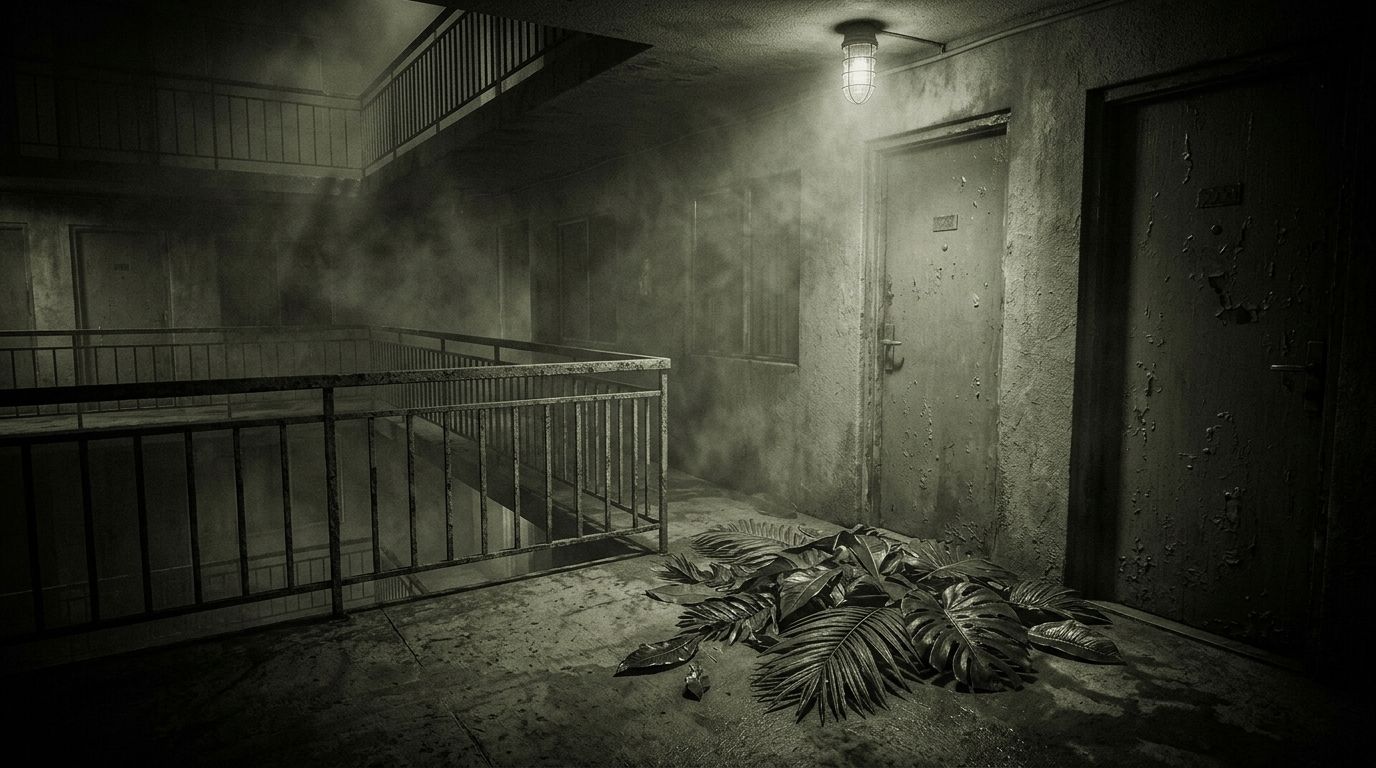
So here’s the profile: the debt is the engine, the mind is the door, and the apartment is never safe, which is the Invasive Breach working underneath. The escalation is graded with real care. First it’s a shape in a corner. Then it’s whispering in Vietnamese behind the bedroom door, from a unit next door that has stood empty for months. Then jungle leaves turn up on a second-floor walkway, and then the thing is crouched inside the locked door.
This is where the real history and the prose horror meet. The real tape was a manufactured ghost: engineers built a dead man’s voice and broadcast it, which on the Lovecraft Metric is Algorithmic Illusion, a haunting somebody designed. The book’s ghost is manufactured too, but by the haunted man’s own mind, and that’s the stronger horror. Clinicians who work with veterans have a name for the wound underneath it: moral injury, described in 2009 by a team at the VA’s National Center for PTSD as the lasting harm of perpetrating, failing to prevent, or witnessing acts that break a person’s deepest moral beliefs. It’s guilt and shame, not fear. Mark’s wound is the “failing to prevent” kind. I’m not diagnosing a character. Mendoza has described something real with great precision.
On the rest of the Lovecraft Metric, Interface as Skin is in earnest, because the thing’s face slides over other people’s faces and back again. Biological Nihilism is offered and refused: the ghoul’s whole pitch is that there’s no good left in the world, and the book doesn’t sign on.
Structural integrity
That burned face gets described again and again, almost word for word. Wax over bone. Melted and rehardened. The work of napalm. Too many teeth. I counted about sixteen restatements in twenty-seven thousand words. And in all those words, the word guilt appears exactly once. The book repeats the mask and almost never names what’s under it. The repetition costs force, but the restraint is a real strength, and both are true at once.
The second cost is the mythology lecture. Dr. Murphy, a demonologist and Korea veteran, explains the ghoul across two long sittings, and the prose half notices: it says his sentences came as if he’d said them out loud before. The third cost is proportion. The final third of the book trades dread for firepower, and the setup that gets Mark there leans on coincidence. You can feel the screenplay in that stretch.
The finding: this is a book that knows exactly what it owes. It keeps an honest ledger from its first page to its last, and it sometimes spends too much of its word count on the collector’s face. The closing pages hold two quiet reveals that I’m not going to touch.

And who should skip it
Normally this is where I bring in the readers. This time there’s almost nobody to bring in. When I checked for the episode, the book had two ratings on Goodreads and a single review, and that review is mine, as is one of the ratings. I’m not going to quote myself and call it a consensus. That near-empty record is exactly why it’s here: the Archive exists for the books nobody has found yet.
If you read war fiction for the procedure, the radio traffic, the weight of the gear and the way a landing zone goes bad, this book will feel right in your hands. If Jacob’s Ladder stayed with you, or you like your ghost stories with real history underneath, this is for you. And if you’ve lost someone to a war that didn’t end when they came home, I think you’ll find it handles that with more care than its pulp surface suggests.
If you want slow dread from the first page to the last, the final third will feel abrupt, because it turns into an action movie. And if repetition bothers you, you’ll notice that face. It’s a novella of about twenty-seven thousand words, though. You can read it in an evening and decide for yourself.
War horror with a conscience
Operation Wandering Soul is built on a real U.S. psychological warfare program, the ghost tapes broadcast over the jungle to exploit Vietnamese beliefs about the restless dead. Mendoza turns that history into the story of Mark Schroeder, a sixty-one-year-old Houston veteran whose medications start pulling him back to one night in 1969, and to the one soldier he didn’t go back for.
The jungle sequences are vivid and precise: the radio procedure, the weight of the gear, and above all the sound of that tape. The flashbacks are triggered by ordinary things, like a dish of spaghetti spilling across an office kitchen floor, or the light sweeping under the glass of a copier. That’s a smart way to show how trauma ambushes a person. It doesn’t wait for a battlefield. It waits for a Tuesday. And the ghoul that follows Mark home is frightening because it’s never only a monster. It’s guilt with teeth.
The book’s origins as a screenplay show at times. A few descriptions repeat until they lose their force, one long conversation stops to explain the mythology, and the final act turns into a full-blown action movie that some readers will find abrupt. None of that sank it for me. The father-and-son scenes hurt in the right way, and the closing pages hold a pair of quiet reveals that reframe what came before. They left me sitting with the book after I’d closed it.
Four stars. War horror with a conscience, and a strong case for Nick Mendoza as a voice to watch. It’s chapter eighteen of this year’s Ledger of Dread, filed under the Symmetrical Debt, with the books where the past sends a bill. The parts I held back go into the Ledger when it’s compiled at the end of the year. If you’ve read it, keep the reveals to yourself for the people who haven’t got there yet.
The book
Operation Wandering Soul: A Vietnam War Ghost Story
Independently published, May 2026
In the Library
I read this on my own Kindle Unlimited subscription.
Plain links only, no affiliate links. Every quotation is from the book and was checked against the text. Stills are from the episode.